English
Plastic Takeout Containers Wholesale: Lid Fit and Stacking Checks
Created on 03.16
Running a busy restaurant means paying attention to every detail. Customers want their meals to arrive hot and without spills. That's why choosing the right food packaging is key for us.
plastic takeout containers
We test our supplies in fast kitchens every day. A tight seal stops leaks on bumpy trips. Our plastic takeout containers ensure a secure fit, giving you and your guests peace of mind.
Kitchens and prep areas often have little storage. We designed these wholesale containers to stack neatly. This keeps your team organized and makes transport safer and more efficient.
Key Takeaways
- Secure lids prevent messy leaks during long trips.
- Stackable designs maximize limited kitchen storage space.
- Reliable seals maintain meal temperatures and freshness.
- Durable construction helps withstand the rigors of delivery.
- Efficient shapes simplify packing for high-volume orders.
- Professional quality boosts overall customer satisfaction.
Why Lid Fit and Stacking Matter for Your Food Business
The success of a food business can depend a lot on its takeout packaging. This includes how well the lids fit and how containers stack. Good packaging can make your business run smoother and keep customers happy.
Lid fit and stacking are key for your takeout packaging. A tight lid fit keeps food safe during transport. Stacking well saves space and cuts costs.
Protecting Food Quality and Preventing Leaks
A good lid fit is crucial for food quality. Leak-proof containers stop spills and leaks. This is very important for foods that are liquid or semi-liquid.
For example, salad bars and soup shops need containers that don't leak. A tight lid also keeps food clean, protecting customer health.
Maximizing Storage Space and Reducing Costs
Stacking containers well saves space. This means less room needed for storage and transport. It can also save you money.
Stacking Efficiency | Storage Space Saved | Cost Reduction |
High | Up to 30% | Up to 25% |
Medium | Up to 20% | Up to 15% |
Low | Up to 10% | Up to 5% |
Enhancing Customer Experience and Brand Reputation
The quality of your takeout packaging affects customer experience and your brand. Secure, easy-to-carry containers make for a better experience.
Using leak-proof containers shows you care about your customers. It shows you're committed to the best service.
Understanding Quality Standards for Wholesale Container Orders
To ensure food packaging safety, it's key to know the quality standards for wholesale plastic takeout containers. At our company, we take these standards seriously. We make sure our products are safe and meet packaging needs.
Quality is top priority for wholesale containers. Material safety and FDA compliance are essential. We use high-quality materials that meet or exceed FDA standards.
Material Safety and FDA Compliance
Our containers are made with safety in mind. We pick materials that are durable and follow FDA rules. This lets our customers trust our products for safe food packaging.
Material | FDA Compliant | Temperature Resistance |
Polypropylene (PP) | Yes | -20°F to 250°F |
Polyethylene Terephthalate (PET) | Yes | -40°F to 200°F |
Manufacturing Consistency Across Large Orders
Consistency is crucial for large wholesale container orders. We have strict quality control to ensure every container meets our standards, no matter the order size.
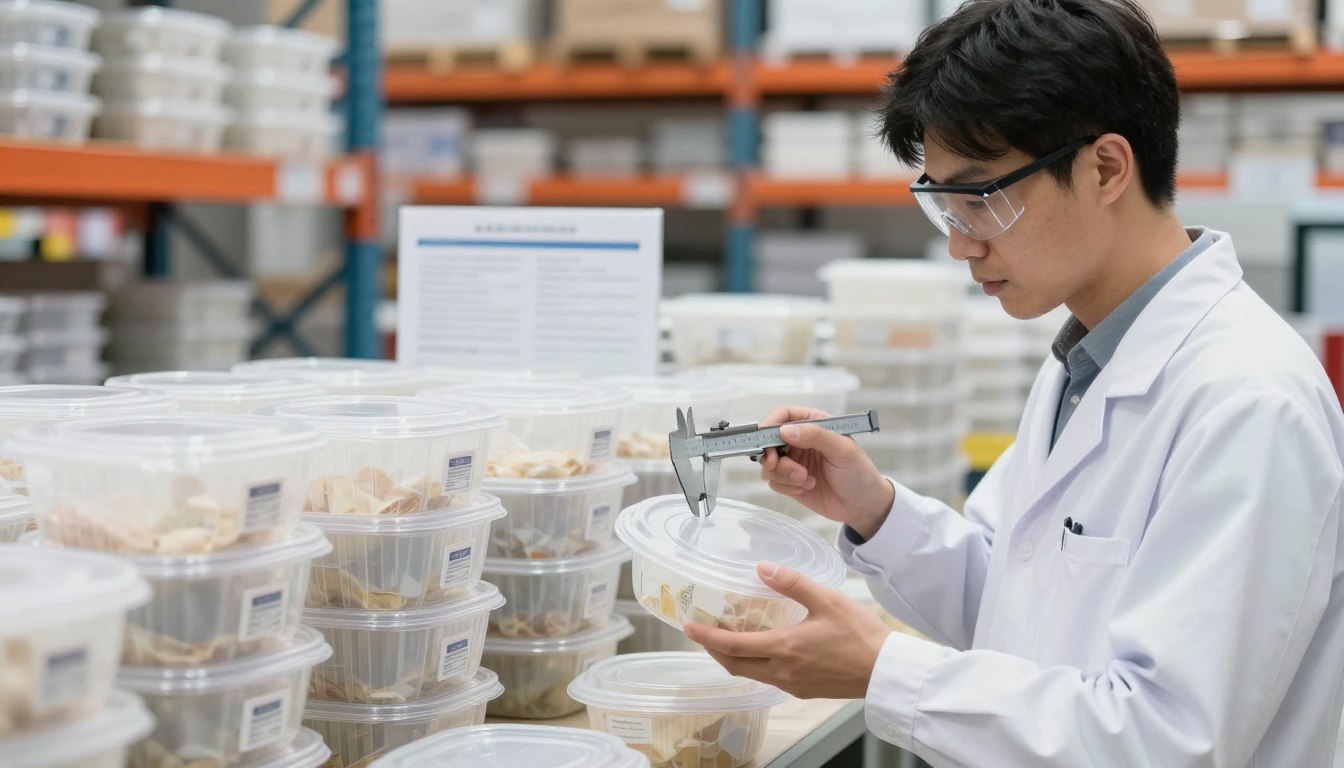
A focused quality control inspection scene in a bright, modern warehouse, showcasing a professional wearing a lab coat and safety glasses inspecting a stack of clear plastic takeout containers. In the foreground, the inspector holds a container lid to check for a perfect fit, with a caliper measuring the gap. The middle ground features rows of neatly arranged takeout containers with visible branding, emphasizing their quality and uniformity. The background includes shelves stocked with more containers and quality control paperwork. Soft, diffused lighting emphasizes clarity and precision, while a slight depth of field blurs the background slightly, keeping attention on the inspection process. The overall atmosphere conveys diligence and professionalism in quality standards for wholesale orders.
Temperature Resistance and Durability Requirements
Our containers can handle different temperatures. They're perfect for various food packaging needs. Whether it's hot or cold food, our containers are built to last.
Durability is key for keeping food safe. We test our containers hard to make sure they can handle food packaging and transport well.
How to Test Lid Fit Before Placing Wholesale Orders
Before buying wholesale plastic takeout containers, test the lid fit. A good fit is key for keeping food quality high and preventing spills. We suggest testing sample containers before a big buy.
The Snap and Seal Test
The Snap and Seal Test checks if the lid fits well. Just snap the lid on and see if it's tight but not too hard. This test makes sure the lid stays in place when moving or storing.
The Shake and Inversion Test
The Shake and Inversion Test checks for leaks. Fill the container with something liquid, shake it, and then turn it upside down. This test shows if the lid can handle movement and spills.
The Pressure and Flex Test
The Pressure and Flex Test checks the lid's strength and flexibility. Press the lid gently and see if it bends. A quality lid should handle some pressure without losing its seal. This is crucial if you stack or store containers.
Testing with Different Food Types
Testing the lid fit with various foods is also vital. Different foods, like saucy or oily ones, need a tighter seal. Testing with different foods ensures your containers work well with many types. For more info on plastic containers and lids, check out Alibaba's product insights.
Performing Stacking Efficiency Checks
Checking how well containers stack is key for saving space and cutting costs. When stacked right, they use less room and are less likely to get damaged. This is important for businesses that buy plastic takeout containers in bulk.
To check stacking efficiency, look at a few things. You need to see how stable they are when stacked, test their weight, and see how they nest together.
Vertical Stack Stability Assessment
Checking if containers stack well means seeing if they stay upright. This is important for keeping them safe during storage and moving.
Key considerations for vertical stack stability include:
- The design of the container's base and how it interacts with the lid or the base of the container above it
- The material used for the containers and its rigidity
- The height and weight distribution of the stacked containers
Weight Load Testing
Testing the weight a stack can hold is crucial. It shows how strong the containers are under different weights.
Factors to consider during weight load testing:
- The maximum weight capacity of the containers
- The distribution of weight across the stacked containers
- The impact of environmental factors such as temperature and humidity on the containers' structural integrity
Container Type | Maximum Weight Capacity | Stack Height |
Standard Container | 50 lbs | 5 units |
Heavy-Duty Container | 100 lbs | 7 units |
Nesting and Space-Saving Evaluation
How well containers nest is key for saving space. Containers that fit together well need less room to store.
Experts say, "The ability of containers to nest is a key factor in determining their overall storage efficiency."
"Efficient nesting can reduce storage needs by up to 50%," according to a leading logistics expert.
Real-World Storage Scenarios
In real life, how well containers stack and nest affects costs. For example, a restaurant can store more containers in the same space. This means they don't need to spend on extra storage.
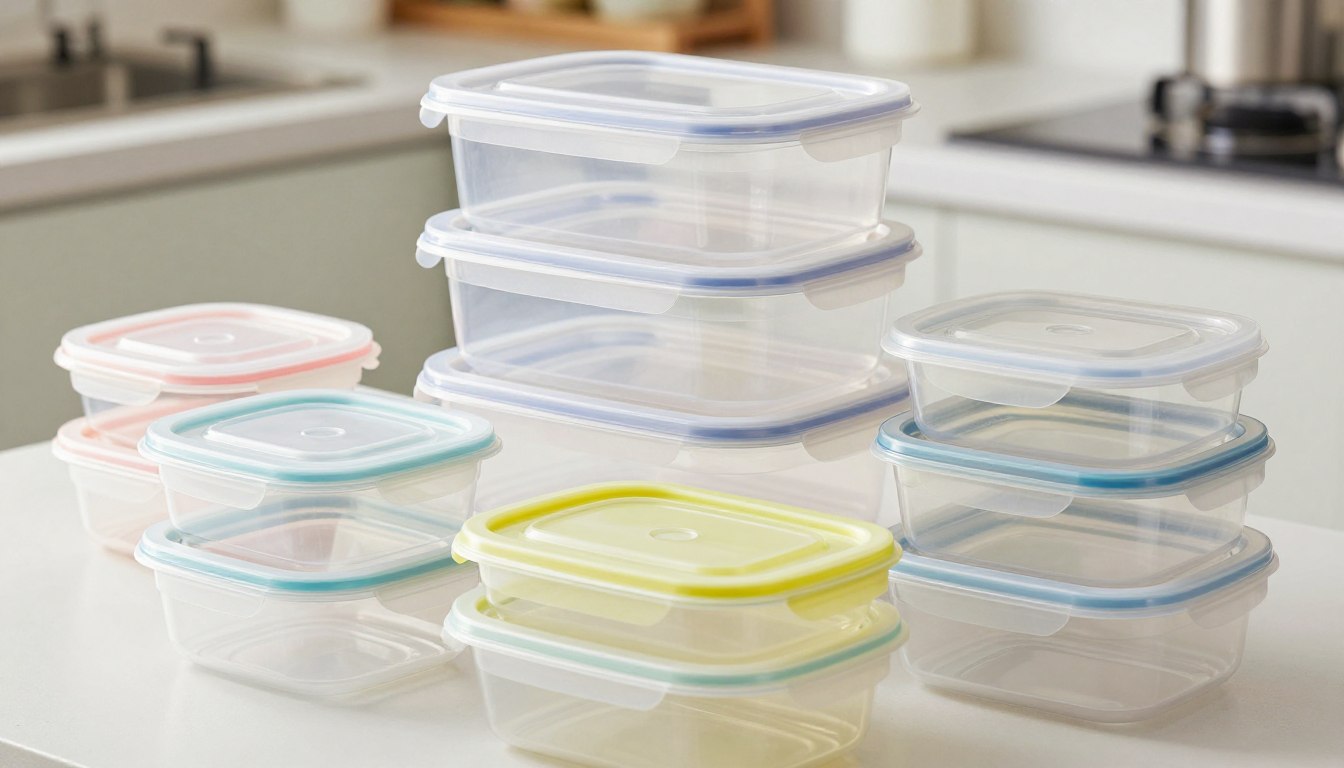
A neatly arranged set of stackable plastic takeout containers in varying sizes, showcasing their efficient lid fit and ability to stack perfectly. In the foreground, focus on a few containers with transparent and brightly colored lids, emphasizing their durability and practicality. In the middle ground, display a larger stack of these containers, demonstrating a seamless stacking arrangement while also revealing their internal structure. The background should feature a soft-focus kitchen environment with natural, diffused lighting, suggesting a practical, everyday setting. Capture the scene from a slightly elevated angle to highlight the stacking efficiency. The atmosphere is clean, organized, and professional, evoking a sense of reliability and innovation in food storage solutions.
By looking at these factors and doing detailed checks, businesses can make their storage and handling better. This leads to saving money and working more efficiently.
Common Issues with Poor Lid Fit and Unstable Stacking
Poor lid fit and unstable stacking are big problems for food businesses using plastic containers. These issues can hurt a business's profits and make customers unhappy. Containers that don't fit well or stack right can cause many problems.
Leakage During Transport and Delivery
Leakage is a big problem when lids don't fit right. Containers that leak can make a mess and damage products. This can lead to a lot of waste and extra costs for businesses.
Experts say, "Containers without secure lids can cause a lot of damage and upset customers."
"The packaging's integrity is key to keeping products safe during transport."
Toppling Stacks and Wasted Inventory
Unstable stacking can also cause big problems. Containers that don't stack well can fall over. This means wasted products and extra costs to replace them.
Customer Complaints and Revenue Loss
These problems can lead to unhappy customers and lost sales. Customers want their food to arrive in good shape. If it doesn't, they might leave bad reviews and not come back.
Issue | Consequence | Impact on Business |
Poor Lid Fit | Leakage During Transport | Product Damage, Additional Costs |
Unstable Stacking | Toppling Stacks | Wasted Inventory, Replacement Costs |
Customer Dissatisfaction | Customer Complaints | Revenue Loss, Negative Reviews |
In summary, problems with lids and stacking can hurt businesses a lot. By understanding these issues, businesses can find ways to solve them. This can make their operations better and their customers happier.
What to Look for When Buying Plastic Takeout Containers Wholesale
When buying plastic takeout containers wholesale, there are important things to look for. The right containers protect your food, improve customer experience, and help your business succeed.
Essential Features of Quality Containers
Quality containers are durable, leak-resistant, and safe for food. Material safety and FDA compliance are key. We seek containers made from high-quality plastics that handle temperatures and handling well.
Good containers keep food fresh and safe. This depends on the material and design, like plastic thickness and lid seal.
Feature | Description | Benefit |
Material Safety | FDA-compliant materials | Ensures food safety and compliance with regulations |
Durability | Resistant to cracks and leaks | Prevents spills and maintains food quality |
Lid Design | Secure and easy-to-use lids | Enhances customer experience and prevents leakage |
Lid Design and Compatibility Options
The lid's design is key for the container's function. A good lid makes the container leak-proof and easy to use. We look for lids that fit our containers well, like snap-on or screw-on.
Experts say a good lid design boosts customer satisfaction and efficiency.
"The lid is not just a cover; it's a critical component that ensures the container's contents remain secure and fresh."
Requesting Samples and Conducting Pre-Purchase Tests
Always ask for samples before a big buy. This lets you test if the containers meet your standards.
We test containers in several ways, like the snap and seal test. This checks the lid's fit and the container's durability.
Working with Reliable Wholesale Suppliers
Choosing a reliable supplier is crucial for quality containers. We seek suppliers known for high-quality products.
A good supplier will provide safety documents and compliance certificates. This ensures their products are safe for food use.
Best Practices for Managing Your Container Inventory
To keep your business running well, it's key to manage your container inventory right. Good management of your plastic takeout containers can stop stockouts, cut down on waste, and boost efficiency.
Optimal Storage Conditions and Organization
Keeping containers in the best storage conditions is crucial. Store them in a clean, dry spot, away from sunlight and moisture. Proper organization is also key; use shelving or bins to keep them off the floor and safe from damage.
Organizing your storage well helps you find what you need fast. This cuts down on time spent on inventory tasks. Use labels and clear signs to manage your stock better.
Training Staff on Proper Container Handling
Teaching your team how to handle containers right is vital. This means showing them how to stack, handle gently, and store them properly.
Regular training sessions help keep good handling habits strong. This reduces the chance of accidents that could harm your containers. By training your staff, you protect your investment and keep quality high.
Rotating Stock and Monitoring Quality
Rotating your stock means using older containers first. This stops them from getting old or damaged. It's also important to check the quality of your containers often. Look for wear, damage, or signs of decay.
Using a first-in, first-out (FIFO) system helps rotate stock well. Regular checks let you spot and fix any quality issues quickly. This keeps your containers up to par for your business.
Conclusion
Lid fit and stacking are key for businesses using plastic takeout containers. They help protect the brand, cut costs, and make customers happy.
When picking wholesale containers, look for high quality. Our containers have secure lids, stack well, and work reliably. They're perfect for food places.
Choosing the right containers helps businesses manage inventory better, reduce waste, and improve customer service. We suggest investing in top-notch food packaging that meets and goes beyond your needs.
FAQ
Why is FDA compliance and material safety so important for our takeout containers?
We make sure our plastic takeout containers are safe and meet FDA standards. This means they're made from high-quality materials that are safe for food. It also means they won't leak harmful chemicals.
Using these certified materials keeps our customers safe. It also makes sure our business follows strict American safety rules.
How can we ensure the lids won't leak during a busy DoorDash or Uber Eats delivery?
We test our containers in three ways. We check if they snap and seal well, if they stay sealed when shaken, and if they can handle pressure and flex.
By testing them with different foods, we know they'll stay sealed even when drivers hit bumps.
What are the benefits of a stackable design for a small commercial kitchen?
Space is key in the food industry. Our containers are designed to stack and nest, saving space. This keeps your kitchen organized and lowers costs by storing more in less space.
Can these containers handle high temperatures and microwave reheating?
Yes! Our containers are built to withstand high temperatures and microwaving. They stay strong and don't warp, giving your customers a great experience.
Why should we request samples before committing to a large wholesale order?
We think it's smart to try before you buy. Asking for samples lets us test them in our kitchen. This makes sure they fit right and are durable before we order a lot.
What is the best way to manage our container inventory and prevent waste?
To avoid waste, rotate your stock and keep it in the best conditions. Train your team on how to handle containers and organize them by when they were made.
This way, you'll use containers in the best condition and avoid damage.
How does the weight load testing help our delivery operations?
Weight load testing makes sure the bottom container can hold up to the weight of others. This keeps the bottom lid from collapsing and prevents spills.
It helps keep your food looking great when it arrives.
Contact
Leave your information and we will contact you.
电话
Whatapp