English
8 Oz Deli Containers Wholesale: Packing Checklist for Importers
Created on 03.16
Finding a reliable food packaging supply chain in the United States is tough. Quality and consistency are key when dealing with big international orders. We aim to make the import process easy and stress-free for you.
When looking for wholesale deli containers, every detail matters. Use a detailed packing checklist to spot mistakes before shipping. This careful approach helps avoid damaged goods and boosts your profits.
8 oz deli containers
Stick to importer guidelines to ensure your products are safe and meet customer needs. We focus on durable, stackable, and leak-proof containers for every shipment. Let's dive into the key factors for your success in the industry.
Key Takeaways
- Verify FDA compliance for all plastic materials before purchase.
- Test lid seals thoroughly to prevent leaks during transport.
- Check thermal safety ratings for microwave and freezer use.
- Confirm minimum order quantities to secure the best bulk pricing.
- Review production lead times for any custom branding requirements.
- Inspect material thickness to ensure high durability and stackability.
Understanding 8 Oz Deli Containers Specifications and Standards
To import 8 oz deli containers, knowing the specs and standards is key. This ensures they meet regulations and customer needs.
8 oz deli containers have important specs like material, size, and lid type. Let's look at why these are crucial.
Material Types and Food Safety Certifications
The material of 8 oz deli containers is vital for safety and durability. Polypropylene (PP) and polyethylene terephthalate (PET) are common. They're good for food packaging.
- Polypropylene (PP): It's great for hot or cold food because it resists chemicals and high temperatures.
- Polyethylene Terephthalate (PET): It's clear, strong, and keeps food fresh longer.
Food safety certifications are also key. Containers must meet Food and Drug Administration (FDA) rules. Look for FDA compliance certifications.
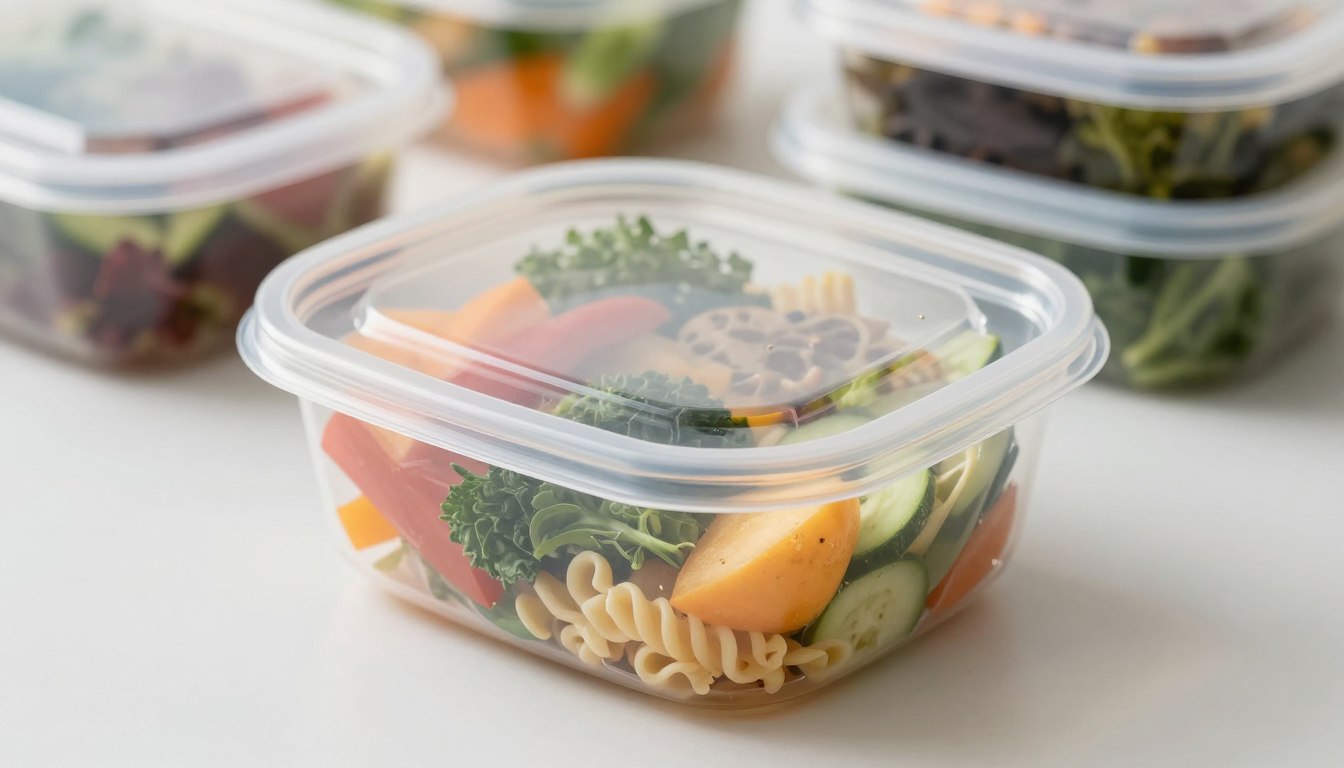
A close-up view of an 8 oz deli container, showcasing its transparent plastic design with a snug-fitting lid, placed on a clean, white surface. The container is filled with colorful, fresh food items, like cut vegetables, pasta salad, and fruits, emphasizing its use in food packaging. In the background, softly blurred containers of various sizes with similar designs can be seen, creating a sense of context. The lighting is bright and natural, enhancing the clarity and freshness of the food inside. The camera angle is slightly tilted downwards, capturing the detail of the container and its contents while maintaining a clean, professional atmosphere, evoking a feeling of quality and reliability in food storage solutions.
Standard Dimensions and Capacity Measurements
The size and capacity of 8 oz deli containers are important. They must fit your needs. Standard sizes help with consistency.
Check the specs carefully:
- Capacity: Make sure the container's size matches your needs.
- Dimensions: The length, width, and height should fit your packaging needs.
Lid Compatibility and Closure Systems
The lid and closure system are crucial for keeping food fresh. Make sure the lids fit well and seal securely.
Common closure systems include:
- Snap-on Lids: Simple to use and seal well.
- Screw-on Lids: Great for containers that need to be opened and closed often.
Pre-Shipment Verification Checklist for Your 8 Oz Deli Containers Order
We have a checklist to make sure every 8 oz deli container is perfect. This detailed process checks if our containers are made right and ready to ship.
Sample Approval and Product Specifications Confirmation
We get a sample approved by our clients before making more. This step is key to make sure the product is what they want. We check things like material, size, and lid type.
We write down all the details and share them with our clients. This includes material types and food safety certifications.
We make sure the containers are safe for food and follow the rules. This means checking for FDA compliance.
Quantity Verification and Carton Configuration
After making the containers, we check how many we have. We also make sure they are packed right for shipping.
We count the containers and check them against the order. We also look at how they are packed to make sure they are safe to transport.
Quantity Range | Carton Configuration | Packaging Type |
1-500 units | 10 units per carton | Individual wrap |
501-1000 units | 20 units per carton | Bulk pack |
1001-5000 units | 50 units per carton | Palletized |
Manufacturing Timeline and Inspection Checkpoints
We stick to a tight schedule to deliver on time. We check the quality at key points during production.
Our schedule is made to fit the client's needs. We inspect often to keep our quality high.
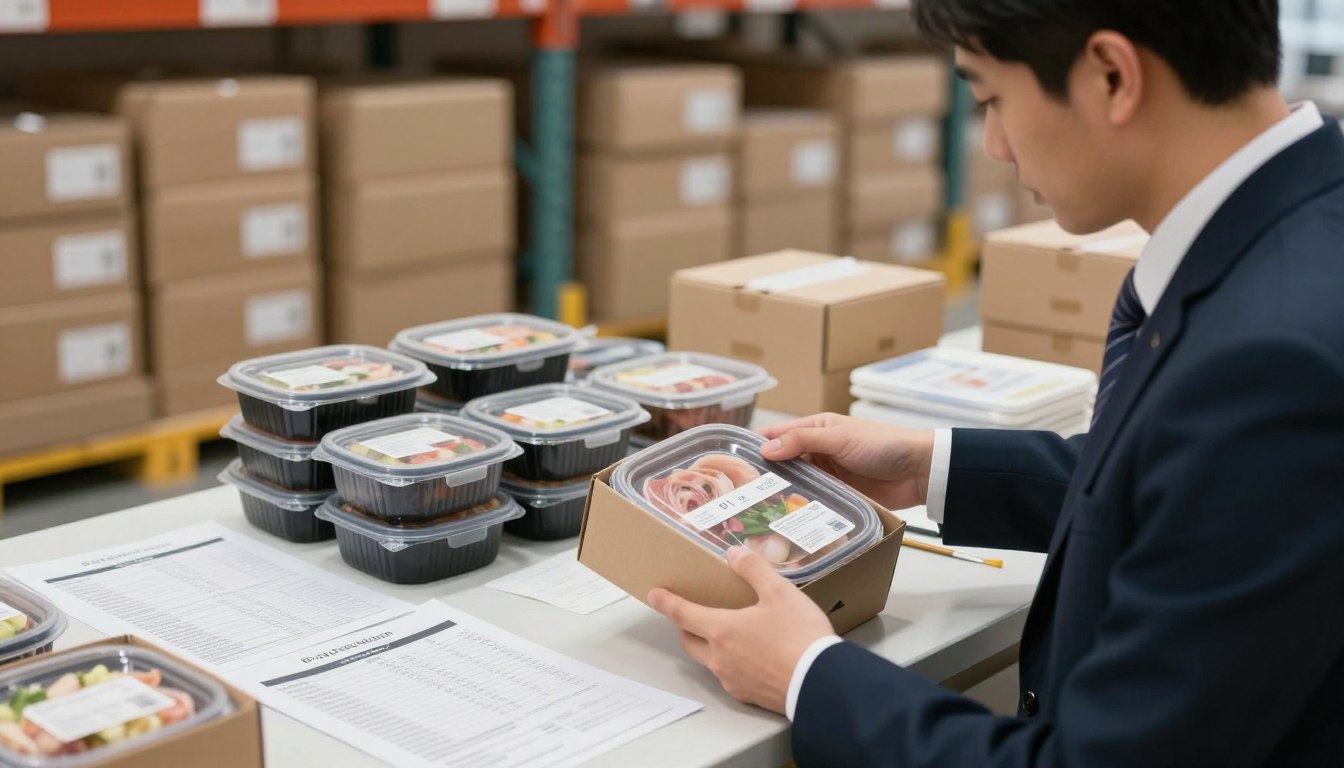
A detailed pre-shipment verification scene featuring a warehouse environment. In the foreground, an inspector, dressed in professional business attire, meticulously examines a box of 8 oz deli containers, ensuring each item meets quality standards. The middle ground displays a table cluttered with packing lists, checklists, and samples of the deli containers, all well-organized. In the background, shelves filled with neatly stacked boxes create a professional, efficient atmosphere. Soft, natural lighting illuminates the scene, highlighting the inspector's focused expression. Capture with a slight depth of field to emphasize the inspector, while the background remains slightly blurred, creating an impression of thoroughness and attention to detail.
Quality Control Standards for Bulk Container Imports
When importing 8 oz deli containers in bulk, it's vital to follow strict quality control measures. This ensures the containers are safe, durable, and perform well.
Visual Inspection Criteria
A key part of quality control is the visual inspection of the containers. Inspectors look for any visible defects or irregularities. These could impact the container's functionality or safety.
Surface Quality and Clarity Assessment
The containers' surface should be free from defects like cracks, bubbles, or discoloration. Clarity is also important, more so if the containers are transparent. Any cloudiness or opacity might show a manufacturing problem.
Structural Integrity Verification
Checking the containers' structural integrity is crucial. It involves seeing if they can handle normal use and storage. Inspectors look at the container's walls, base, and lid for any weakness signs.
Leak Testing and Durability Requirements
To make sure containers are leak-proof and durable, leak testing is done. Containers are filled with liquid and tested for leaks under different conditions. This includes when the container is under pressure or temperature changes.
The FDA guidelines state that containers for food contact must meet certain safety standards. Our leak testing meets these regulations.
Temperature Resistance and Safety Features
The containers must also withstand extreme temperatures without losing their shape. This is key for storing food at high or low temperatures.
Temperature Range | Container Material | Expected Outcome |
-20°C to 100°C | Polypropylene (PP) | No deformation or leakage |
-40°C to 120°C | Polyethylene (PE) | No deformation or leakage |
By following these quality control standards, importers can guarantee their 8 oz deli containers are safe, durable, and meet all regulations.
Documentation and Compliance Requirements for US Imports
Importing 8 oz deli containers into the US has its own set of rules. You need to know about the documents and rules you must follow. Making sure you meet all the requirements is key for a smooth process.
FDA Food Contact Compliance Certificates
Getting FDA Food Contact Compliance Certificates is a must for importing 8 oz deli containers. These certificates prove that the containers follow FDA rules for food contact materials. The FDA says these materials must be safe for food use.
"The FDA requires that all food contact materials, including packaging, be safe for consumer use," says a leading expert in food safety regulations. It's crucial that your 8 oz deli containers meet these standards.
Customs Documentation and Import Permits
Preparing the right customs documentation and import permits is also vital. You'll need a commercial invoice, bill of lading, and any special permits for food packaging imports.
- Commercial Invoice: Detailed invoice that includes the description, quantity, and value of the goods.
- Bill of Lading: Document that serves as a receipt of goods and evidence of the contract of carriage.
- Import Permits: Specific permits required for importing certain types of goods, including food packaging.
Bill of Lading and Shipping Documentation Verification
Checking the bill of lading and shipping documentation is important to avoid delays. This paperwork should match the shipment details, like type, quantity, and destination.
Product Labeling and Country of Origin Marking
Lastly, make sure your 8 oz deli containers follow product labeling and country of origin marking rules. This means labeling them with the right info, like where they came from and any safety tips.
Experts say, "Accurate labeling and country of origin marking are critical for compliance with US import regulations." Proper labeling helps avoid problems during import.
Conclusion
As we wrap up our guide on importing 8 oz deli containers, it's clear that careful planning is key. Attention to detail is also crucial for a successful import.
We've covered the essential steps for importers. This includes understanding product specs and following US regulations.
By following these steps, importers can ensure their containers meet standards. This means providing safe and reliable products to customers.
It's important to follow FDA regulations and other standards for a smooth import process.
We suggest importers stay informed and work closely with suppliers. This ensures compliance and quality.
FAQ
What materials should we prioritize for our 8 oz deli container imports?
Focus on Polypropylene (PP) or Polyethylene Terephthalate (PET). PP is great for hot foods and microwaves. Make sure the containers are FDA certified for food safety in the US.
How do we ensure that the lids will fit our containers perfectly?
Check the dimensions and closure systems early. Most containers have a standard diameter. We test for a secure, leak-resistant fit before mass production.
What does our pre-shipment verification checklist include?
We verify quantity and carton configuration for shipping. We check if the goods match our specs and confirm the manufacturing timeline.
How do we maintain high quality control standards for bulk orders?
We inspect for surface quality and clarity. We also test for structural integrity and leaks. This ensures containers are durable for use.
What specific documentation do we need for US Customs?
Prepare a file with FDA Compliance Certificates, Bill of Lading, and import permits. Check for Country of Origin markings and product labels to meet regulations.
Why is clarity assessment important for these containers?
Clarity shows food freshness. We assess clarity to ensure the containers look premium. This is important for our clients.
How do we verify the durability of the containers for hot and cold use?
We test containers in freezers and microwaves. This checks their temperature resistance and safety for food. It ensures a safe product for our customers.
Contact
Leave your information and we will contact you.
电话
Whatapp