English
Take Out Boxes Wholesale: What to Ask Before You Buy
Created on 03.16
Choosing take out box packaging is a big decision for your food brand. The quality of your containers affects how customers view your service. Our team aims to help you find the best delivery supplies for your menu.
take out boxes
Finding top-quality wholesale shipping vendors takes time and effort. Look for durability and thermal features to keep meals fresh. Also, check if materials are eco-friendly to meet today's consumer needs in the United States.
We will also talk about pricing and bulk orders. Getting a good deal helps your profits as you expand. Let us help you with these key questions for long-term success.
Key Takeaways
- Compare material durability to ensure food stays secure during transport.
- Evaluate vendor credibility and shipping speeds for your specific region.
- Look for eco-friendly solutions to satisfy green-minded American consumers.
- Balance bulk pricing benefits against your available storage space.
- Test container strength for heavy or saucy signature dishes.
- Confirm lead times to maintain a steady supply of delivery gear.
Why Your Choice of Take Out Boxes Impacts Your Bottom Line
Choosing the right take out boxes is key to keeping your business profitable. The boxes you pick can affect your costs and how happy your customers are. For example, boxes that aren't grease-resistant can cause spills and damage. This means wasted food and unhappy customers.
But, high-quality, eco-friendly take out boxes can boost your brand. They appeal to customers who care about the environment. This can help reduce waste and make your brand more appealing, leading to loyal customers.
Take out boxes come in many materials like cardboard, plastic, foam, and biodegradable ones. Each has its own cost and benefits. For instance, biodegradable boxes might cost more at first. But, they can improve your brand's image and meet environmental rules.
When looking at take out box costs, think about more than just the price. Consider how durable they are, how happy they make customers, and how they can make your brand stand out. Custom options can add value too.
By carefully picking your take out boxes, you can support your business's financial health and brand goals. Look at your needs and explore different materials and suppliers to make a smart choice.
What Materials and Quality Standards Should We Require?
When picking take out boxes, material and quality are key. They affect customer happiness and food safety rules.
The material of take out boxes matters a lot. It affects how well they work, their impact on the environment, and their cost. It's important to look at different materials based on what you need.
Comparing Cardboard, Plastic, Foam, and Biodegradable Options
Take out boxes come in many materials, each with its own traits. Knowing these differences helps you choose wisely.
Paper-Based Take Out Boxes
Paper-based boxes, like cardboard or kraft, are eco-friendly and compostable. They're good for many foods and are often cheaper.
Plastic Container Alternatives
Plastic boxes are strong and keep food safe. But, they're not as green as other options and can't be composted.
Molded Fiber and Bagasse Options
Molded fiber and bagasse boxes are made from natural fibers and break down easily. They're a green choice for serving many foods.
Material | Eco-Friendliness | Durability | Cost |
Paper-Based | High | Medium | Low-Medium |
Plastic | Low | High | Medium-High |
Molded Fiber/Bagasse | High | Medium | Medium |
Food Safety Certifications You Need to Verify
It's crucial that your take out boxes meet food safety rules. Look for FDA approval or BPA-free labels to ensure they're safe for food.
Testing for Grease Resistance and Leak Prevention
Grease resistance and leak prevention are also key. Testing or asking for test results from your supplier ensures your boxes work well.
By carefully checking the material, quality, and performance of take out boxes, businesses can make smart choices. These choices balance customer happiness, work efficiency, and caring for the environment.
How Should We Evaluate Pricing and Order Requirements?
When looking at wholesale take out boxes, pricing and order requirements are key. They can greatly affect your business's profit. It's important to look at the total cost, not just the initial price.
Breaking Down Wholesale Price Per Unit
Understanding wholesale take out boxes pricing is more than just the unit price. You must consider material costs, manufacturing, and customization. For example, bulk orders might seem cheaper, but the total cost is what matters.
Experts say, "The best value isn't just the lowest price. It's the total cost of ownership."
"The total cost of ownership includes not just the purchase price but also any additional costs such as shipping and storage."
Order Quantity | Price Per Unit | Total Cost |
1,000 units | $0.50 | $500 |
5,000 units | $0.40 | $2,000 |
10,000 units | $0.35 | $3,500 |
Understanding Minimum Order Quantities
Minimum order quantities are important. Suppliers have these to ensure efficient production and shipping. Knowing these can help avoid surprises.
For example, a supplier might require a minimum of 5,000 units. Ordering less could mean higher prices or extra fees.
Identifying Hidden Fees and Shipping Costs
Shipping costs and hidden fees can add up. Always ask about extra costs like packaging or fuel surcharges. Knowing these costs can prevent unexpected expenses.
By carefully evaluating pricing and order requirements, you can make a better choice. This ensures you get the best value for your business.
What Customization and Branding Options Are Worth Considering?
Customizing your take out boxes can make a big impact on your customers. They're not just for packaging. They're a marketing tool that can boost your brand and improve the customer experience.
When thinking about customization, remember a few key things. These include the printing methods and costs, the sizes and types of boxes you can get, and how long it takes to get custom versus stock orders.
Logo Printing Methods and Their Costs
Logo printing is key for customizing your take out boxes. There are different printing methods, each with its own price and benefits.
- Flexographic Printing: Great for big orders, it's a cost-effective choice for lots of boxes.
- Digital Printing: Good for small orders, it gives high-quality prints quickly.
- Screen Printing: More pricey, but it's durable and perfect for detailed designs.
The right printing method depends on your budget, how many boxes you need, and the print quality you want.
Size Range and Compartment Configurations
The size and setup of your take out boxes matter a lot. They affect how useful and appealing they are. Think about these points:
- Size Range: Make sure the supplier has various sizes for different foods and portions.
- Compartment Configurations: Boxes with compartments keep food tidy and prevent spills or mixing.
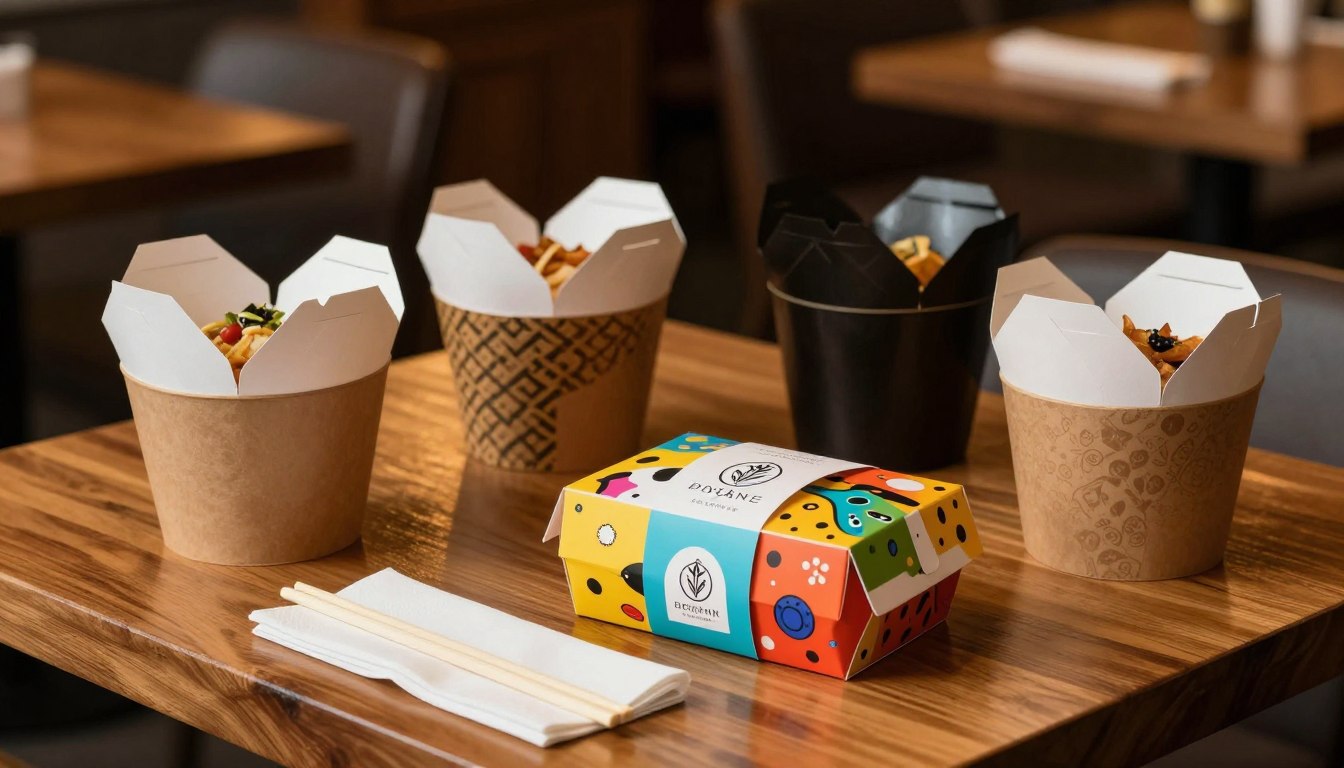
A selection of custom take-out boxes displayed artistically on a polished wooden table, showcasing a variety of unique designs and colors. In the foreground, a brightly colored box featuring playful graphics and an elegant logo sits near a neatly folded napkin and a pair of chopsticks. The middle ground contains additional take-out boxes in sophisticated patterns and textures, such as kraft paper and glossy finish. The background is softly blurred, featuring a cozy restaurant setting with warm lighting that creates an inviting atmosphere. Capture the scene from a slightly elevated angle to highlight the customization details and branding options. The mood should feel warm, welcoming, and reflective of culinary creativity and branding.
Lead Times for Custom versus Stock Orders
Knowing the lead times for custom and stock orders is crucial for planning. Custom orders take longer because of the printing and production steps.
Here are some important things to remember:
- Custom orders can take weeks to months, based on design complexity and the supplier's schedule.
- Stock orders are ready for immediate shipping or have shorter lead times.
Talking to your supplier about your timeline is key to getting your orders on time.
How Do We Assess Supplier Credibility and Support?
Choosing a take out box supplier is a big deal. We need to check their credibility and support. A good supplier can make a big difference in the service you offer.
First, we should look at their business licenses and experience. This means checking for certifications and their past work with similar businesses.
Verifying Business Licenses and Industry Experience
It's important to make sure the supplier is legal and ethical. Look for ISO 9001 or other certifications. Also, knowing their experience helps us see if they can meet our needs.
- Check for relevant business licenses and certifications.
- Review their industry experience and client testimonials.
- Assess their reputation through online reviews and ratings.
Requesting Samples and Conducting Quality Tests
Getting samples from suppliers lets us see the quality of their products. We should test these samples for durability, leak resistance, and performance.
Key quality tests include:
- Durability testing to ensure the boxes can withstand handling.
- Leak resistance testing to prevent spills and leaks.
- Material safety testing to ensure compliance with food safety standards.
Understanding Warranty and Defect Replacement Policies
It's important to know about the supplier's warranty and how they handle defects. We need to understand how they deal with bad products and what warranty they offer.
Key aspects to consider:
- The duration of the warranty and what it covers.
- The process for returning or replacing defective products.
- Any additional costs associated with warranty claims.
Evaluating Customer Service Responsiveness
Good customer service is key for a smooth partnership. We should see how fast they respond and how they solve problems.
Indicators of good customer service include:
- Prompt responses to emails and phone calls.
- Helpful and knowledgeable customer support staff.
- Proactive communication regarding order status and issues.
What Sustainability Features Should We Prioritize?
In today's world, the green features of take out boxes are crucial. As people care more about the planet, businesses must change too. The material of take out boxes greatly affects the environment.
Eco-friendly take out boxes are now a must for businesses wanting to be green. We must think about several things when picking take out boxes.
Compostable and Biodegradable Certifications
For green take out boxes, getting certifications is key. Compostable and biodegradable certifications mean the boxes can naturally break down. This cuts down on waste and harm to the environment. Look for CPI or BPI to know if they meet standards.
For example, boxes made from plants can greatly cut our carbon footprint. These materials turn into safe compost.
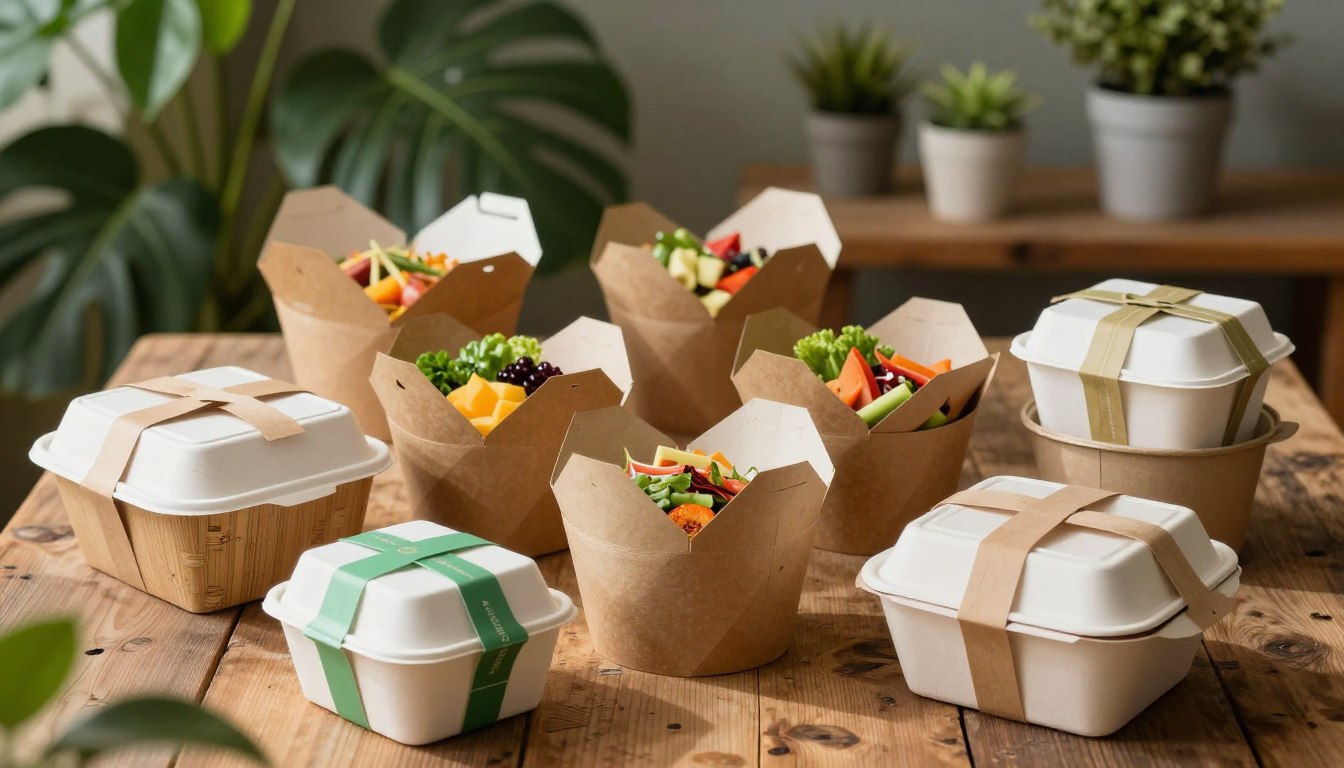
A collection of eco-friendly take-out boxes displayed prominently in the foreground, showcasing various designs made from sustainable materials such as bamboo, recycled paper, and compostable plastics. In the middle ground, arrange colorful food items peeking out of the boxes, emphasizing freshness and vibrant colors. The background features a rustic wooden table adorned with green foliage and small potted plants to evoke a sense of nature and sustainability. Soft, natural lighting filters in from the side, creating gentle shadows and highlighting the textures of the take-out boxes. Capture the scene at eye level with a shallow depth of field for a warm and inviting atmosphere, reflecting the importance of sustainability in food packaging.
Recyclability in Your Local Market
It's also important that our take out boxes can be recycled locally. We must pick materials that our recycling centers accept. Knowing our recycling options helps us choose the right materials.
Boxes that can be recycled help reduce waste and support a green economy. By picking recyclable materials, we lessen our packaging's environmental impact.
Balancing Eco-Friendliness with Performance Needs
We must also make sure our boxes work well. They need to keep food safe, stop leaks, and handle different temperatures. Balancing eco-friendliness with functionality is essential to please both our customers' green wishes and their practical needs.
For instance, some green materials might not stop grease as well as old ones. We should test different options to find the best mix of green and useful.
By focusing on green features like certifications, recyclability, and performance, we make smart choices for our boxes. This helps the planet and makes our brand more appealing to those who care about the environment.
What Logistics Questions Should We Ask About Delivery and Storage?
To make sure our take out boxes are delivered and stored right, we need to ask the right questions. Knowing how take out box delivery and storage work is key for smooth business operations.
When looking at potential suppliers, we should ask about their delivery methods. This includes lead times and packaging options. This info helps us manage our stock better.
We should find out the average time it takes for standard and custom orders. Also, knowing the packaging choices helps ensure our boxes arrive safely.
It's important to know about the storage options for our boxes. We need to understand if there are special conditions, like temperature or humidity controls, needed.
Lastly, we must understand the shipping costs and where the supplier delivers. We should ask if they can reach our location and what it costs.
Conclusion
Choosing the right take out boxes wholesale is key for your business. It affects your profits and the environment. Look at materials, prices, customization, and the supplier's reputation. Also, consider sustainability and logistics.
Going green with packaging is a big step. It helps cut down on waste and supports the planet. Biodegradable and compostable boxes are great options for this.
We've shown you how to pick the best take out boxes. Use this knowledge to boost your brand, please your customers, and help the planet.
FAQ
Why should we prioritize buying take out boxes wholesale for our business?
Buying take out boxes in bulk helps us save money. It also means we always have what we need, avoiding stockouts. This keeps our business running smoothly.
How does our choice of packaging material affect our bottom line?
The packaging we choose affects our costs and customer satisfaction. Cheap boxes can lead to food damage and costly refunds. But, eco-friendly options can boost our brand and attract green-conscious customers.
What are the differences between cardboard, bagasse, and plastic container alternatives?
Cardboard is recyclable, while molded fiber or bagasse is compostable. Plastic is durable but not eco-friendly. Always check food safety certifications, like the FDA's, for any material.
What should we look out for regarding minimum order quantities (MOQ)?
MOQs affect our initial costs and storage needs. Be aware of any extra fees or shipping costs that might add up.
Can we customize our wholesale boxes with logo printing?
Yes, we can add logos to our boxes. Custom orders take longer, but we can pick the right size and design for our menu.
How do we verify the credibility of a new supplier?
Ask for samples to test quality. Check licenses, experience, and warranty policies. This protects us from bad products.
What sustainability features are most important for modern food service?
Look for compostable and biodegradable options. Also, check if the materials can be recycled locally. This keeps our business green and efficient.
What logistics questions should we ask to ensure smooth delivery?
Ask about lead times and delivery schedules. Knowing how products are packaged helps with inventory management. This keeps our kitchen organized.
Contact
Leave your information and we will contact you.
电话
Whatapp