English
Plastic Bowls With Lids Wholesale: Soup Packaging Spec Checklist
Created on 03.16
Finding the right containers for your liquid dishes can feel overwhelming. Quality wholesale packaging is key for any food service business. It keeps your customers' hot meals safe and prevents messy leaks.
plastic bowls with lids
Our guide makes choosing the right containers easy with a clear checklist for soup packaging. We aim to help you meet safety standards while keeping your brand professional.
Choosing the right items is more than just picking a size. It's about performance. When you order plastic bowls with lids, think about heat resistance and material durability for your kitchen.
We'll guide you through the top specs for smooth daily service. Let's explore what makes a container reliable for our daily needs.
Choosing the perfect wholesale packaging saves money and reduces waste. We offer tips to help your business grow and keep diners happy.
Our goal is to make your buying journey simple and effective. We're here to ensure your food stays fresh and your clients stay satisfied.
Key Takeaways
- Prioritize high heat resistance for hot liquid meals.
- Ensure a leak-proof seal to prevent accidental spills.
- Choose BPA-free materials to meet health standards.
- Opt for stackable designs to save kitchen storage space.
- Verify microwave compatibility for extra customer convenience.
- Select clear covers to improve food presentation.
Why Specifications Matter for Wholesale Soup Packaging
When it comes to wholesale soup packaging, getting the specifications right is key. It's important to make sure your packaging meets the standards. This helps keep food safe and prevents problems like leakage or contamination.
There are many things to consider in wholesale soup packaging. This includes the material, size, lid design, and how well it can handle temperature. It's also important to use food-grade plastic for the bowls and lids. This ensures the packaging is safe for food contact.
Specifications must also follow food safety rules, like FDA compliance and BPA-free. Here are some main reasons why specifications are important:
- Ensures compliance with food safety regulations
- Prevents leakage and contamination
- Maintains product integrity during transportation and storage
- Enhances customer satisfaction through reliable packaging
In conclusion, precise specifications for wholesale soup packaging are crucial. They ensure the packaging is safe, reliable, and meets regulatory standards. By focusing on these details, businesses can avoid problems and keep customers happy.
Material Composition and Food Safety Standards
It's key to know what plastic bowls with lids are made of. This is for businesses wanting safe, durable, and eco-friendly packaging. The material affects the packaging's safety, strength, and how it impacts the environment.
Polypropylene (PP) vs. Polyethylene Terephthalate (PET)
Polypropylene (PP) stands up well to high heat, making it good for microwave use. Polyethylene Terephthalate (PET) is clear, strong, and light, perfect for cold foods.
Choosing between PP and PET depends on the bowl's use. For hot soups, PP is better because it can handle heat.
FDA Compliance and BPA-Free Certification
It's vital that the material meets FDA standards for food contact. FDA compliance means the packaging is safe and doesn't harm food. Also, being BPA-free is important for safety, as BPA can be harmful.
Recyclability and Environmental Considerations
Both PP and PET can be recycled, but it depends on local recycling. Choosing eco-friendly packaging is key for businesses as more people want products that are good for the planet.
Let's look closer at how PP and PET affect the environment:
Material | Recyclable | Common Uses | Environmental Impact |
PP | Yes | Hot food containers, microwave-safe bowls | Generally considered safe, but not all PP is recycled |
PET | Yes | Cold food packaging, clear containers | Widely recyclable, but can contribute to microplastic pollution if not disposed of properly |
A visually engaging composition of various plastic bowls with lids, arranged in a modern, clean setting. In the foreground, prominently display a variety of round and square bowls in different colors and sizes, showcasing their transparency and quality. In the middle ground, focus on labeled components highlighting the materials used, emphasizing BPA-free plastic and eco-friendly certifications. The background features a subtle, out-of-focus kitchen environment with natural lighting, highlighting safety and cleanliness. A soft glow illuminates the scene, creating a professional and inviting atmosphere. The angle captures depth and perspective, inviting viewers to appreciate the details of material composition and food safety standards visually.
Size and Capacity Specifications
Choosing the right size and capacity for plastic bowls with lids is key for different serving needs. We know that various soup portions need specific packaging. This ensures convenience and customer satisfaction.
The capacity of plastic bowls varies a lot. It caters to different serving sizes and types of soups or dishes. Here's a breakdown of common sizes and their uses:
Small Bowls: 8-12 oz for Appetizers and Sides
Small plastic bowls with lids, ranging from 8 to 12 ounces, are great for appetizers, sides, or small portions of soups. They're perfect for:
- Sampling new flavors
- Serving condiments or dips
- Offering bite-sized portions in buffet settings
Medium Bowls: 16-24 oz for Standard Soup Portions
Medium-sized bowls, with capacities between 16 to 24 ounces, are the most used for standard soup servings. They are versatile and convenient for:
- Serving a satisfying portion of soup
- Catering to individual meal servings
- Packaging soups for take-out or delivery
Large Bowls: 32 oz and Above for Family-Size Servings
Large plastic bowls with lids, 32 ounces and above, are for family-size servings or for customers with larger appetites. They're great for:
- Family meals or gatherings
- Serving hearty, filling soups
- Catering events or large parties
Understanding size and capacity specifications helps businesses pick the right plastic bowls with lids. This matches their menu offerings and customer needs effectively.
Lid Design and Seal Integrity
The lid design and seal integrity are key to keeping soup fresh and safe. A good lid prevents leaks and keeps the soup fresh during transport and storage.
When looking at lid design, several factors are important. The type of lid mechanism is crucial for usability and effectiveness.
Snap-On vs. Hinged Lid Mechanisms
There are mainly two lid types: snap-on and hinged. Snap-on lids are easy to put on and take off. They're great for people who need to open their soup often. Hinged lids attach to the bowl with a hinge. They're easy to open and close, and they're less likely to get lost.
Lid Type | Advantages | Disadvantages |
Snap-On | Easy to attach and detach, convenient for consumers | Risk of losing the lid if not properly secured |
Hinged | Minimizes the risk of losing the lid, easy to open and close | May be more complex and expensive to manufacture |
Leak-Proof Testing Standards
It's vital that the lid is leak-proof to avoid spills. Manufacturers test their lids to make sure they meet standards. They check for leaks under different conditions, like when the bowl is shaken or when it's hot or cold.
Leak-proof testing standards are key to ensuring the packaging works as expected. Following these standards helps prevent damage to the product and keeps customers happy.
Venting Features for Hot Liquids
Venting features are essential for hot liquids to prevent steam buildup. Venting mechanisms let steam out safely. This keeps the seal strong and safe.
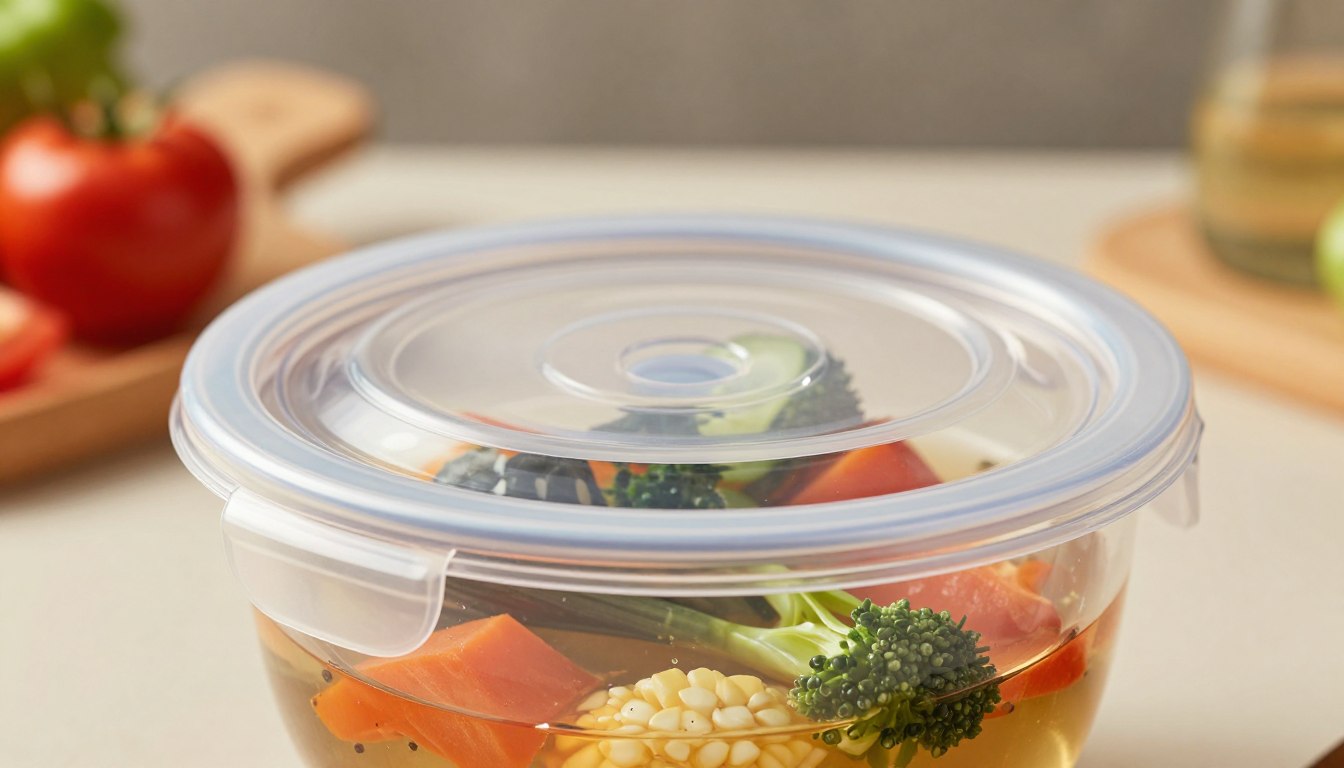
A close-up view of a sleek, modern plastic bowl with a securely fitted transparent lid, showcasing its innovative seal design. The foreground features intricate details of the lid's locking mechanism, emphasizing its airtight seal, with a glimmer of light reflecting off the smooth plastic surface. In the middle, the bowl sits on a clean, neutral-colored surface, surrounded by colorful vegetable ingredients to suggest its use in soup packaging. The background is softly blurred, with hints of kitchen utensils and ambient lighting creating a warm, inviting atmosphere. The overall mood is professional and appealing, perfect for highlighting the functionalities of lid design and seal integrity in packaging solutions.
Adding venting features to lids makes packaging safer and more effective. This is very important for soups and other hot foods in disposable containers.
Temperature Resistance and Durability Requirements
For businesses using plastic bowls with lids, knowing about temperature resistance and durability is key. These aspects affect safety, convenience, and customer happiness.
Plastic bowls must handle hot and cold foods well. Microwave-safe specifications are crucial. Not all plastics can handle heat without warping, melting, or releasing harmful chemicals.
Microwave-Safe Specifications
Plastic bowls for microwaves need to be made from safe materials. They must not change shape or release harmful substances when heated. Manufacturers test these products to ensure they are safe for microwaves.
These tests check for deformation, cracking, and harmful substance release. Compliance with FDA guidelines is also key. It means the materials are safe for food contact.
Material | Microwave Safety | Freezer Compatibility |
Polypropylene (PP) | Yes | Yes |
Polyethylene Terephthalate (PET) | No | Yes |
High-Density Polyethylene (HDPE) | Generally Safe | Yes |
Freezer Storage Compatibility
For businesses storing food in freezers, plastic bowl compatibility is crucial. The material should stay flexible and not crack at cold temperatures.
Most PP and HDPE bowls are good for freezer use. Their chemical makeup keeps them durable in cold conditions.
Heat Retention Properties
Plastic bowls' heat retention is important for hot foods. While plastic may not keep heat as well as ceramic, some bowls are made to retain heat better.
Understanding plastic bowls' temperature and durability needs helps businesses choose the right packaging. This ensures their products are safe and appealing to customers.
Choosing the Right Plastic Bowls With Lids for Your Business
Finding the right plastic bowls with lids can boost your soup packaging. But, picking the perfect ones can be tough. There are many options, and choosing the right ones for your menu, branding, and logistics is key.
When making a choice, we must think about a few important things. First, we need to match our bowl style to our menu. This means looking at the sizes and types of soups or dishes we serve.
Matching Bowl Style to Your Menu Offerings
Different bowl sizes fit different menu items. For example, small bowls (8-12 oz) are great for appetizers or sides. Larger bowls (32 oz and above) are better for family-size servings.
Bowl Size | Ideal Use | Capacity |
Small | Appetizers/Sides | 8-12 oz |
Medium | Standard Soup Portions | 16-24 oz |
Large | Family-Size Servings | 32 oz and above |
Branding and Customization Options
Branding is very important for any business, and packaging is no exception. We can customize our bowls with lids to show our logo, colors, or other brand elements. This makes our brand more recognizable and adds a professional look to our packaging.
Customization options include:
- Logo printing
- Color matching
- Special designs or patterns
Stackability and Storage Efficiency
Practical aspects of packaging are also important. Stackable bowls help with storage and transportation. They save space and prevent damage during shipping.
By picking stackable bowls with lids, we can improve our logistics and cut costs on storage and handling.
Cost Analysis and Minimum Order Quantities
Companies should do a detailed cost analysis for plastic bowls with lids wholesale. They need to look at several important factors. These factors affect the cost and efficiency of packaging.
Price Per Unit vs. Bulk Discounts
When buying, it's key to think about the price per unit versus bulk discounts. Buying more often means a lower price for each item. For example, a big order might get a discount, like for 10,000 units.
- Small orders (less than 5,000 units): Higher price per unit
- Medium orders (5,000-10,000 units): Moderate price per unit
- Large orders (over 10,000 units): Lower price per unit due to bulk discounts
Shipping and Storage Costs
Shipping and storage costs are also important. They add to the total cost. The size and weight of the packaging matter a lot.
Key considerations:
- Shipping costs: Big orders cost more to ship because they're heavier and bigger.
- Storage costs: Companies must think about the cost of keeping items in stock. This includes the cost of space and managing inventory.
Supplier Reliability and Lead Times
The reliability of the supplier and their lead times are crucial. A good supplier with quick delivery helps keep operations running smoothly.
Conclusion
Choosing the right plastic bowls with lids for soup packaging is very important. It affects how customers feel and your business's profits. We've looked at key things to think about, like what the bowls are made of and how big they are.
We've also talked about the lids and how well they keep heat in. By looking at these details, businesses can make sure they offer top-notch soup packaging. This meets their own needs and what their customers want.
Whether you need bowls that can go in the microwave, won't leak, or can be customized, knowing about packaging specs is crucial. This helps you make smart choices.
When you're ready to pick out soup packaging, think about more than just how it works. Consider if it's good for the planet and if it can help your brand stand out. This way, you'll improve your products and help your business succeed in the food market.
FAQ
Why should we prioritize Polypropylene (PP) over other plastics for hot soup packaging?
We suggest Polypropylene (PP) because it's great at handling heat. It doesn't warp like PET does when it gets too hot. Brands like Berry Global make PP containers that stay strong even with boiling liquids. This makes them perfect for reheating in the microwave.
Are these wholesale plastic bowls compliant with food safety regulations?
Yes, they are. We make sure every bowl meets FDA compliance standards. We also look for BPA-free certification to keep your food safe. This gives you peace of mind for your customers and your business.
How can we ensure our lids are truly leak-proof during delivery?
For leak-proof lids, look for hermetic seal or double-rim snap-on mechanism. Always test the seal integrity before shipping. Also, choose lids with venting features to prevent steam buildup that could cause the lid to pop off.
What is the best bowl size for a standard lunch portion of soup?
For a single serving, 16-24 oz bowls are perfect. They hold enough for a hearty soup. For smaller dishes, 8-12 oz bowls are better. And for family meals, go for 32 oz containers or bigger.
Can these plastic soup bowls be used for freezer storage?
Yes, many wholesale containers are freezer-safe. This means they won't get brittle or crack in the freezer. Brands like Genpak make great options that work well in the freezer and microwave.
Are there eco-friendly options for plastic soup packaging?
We focus on high recyclability for sustainable options. Most PP bowls are recycling code #5. Look for suppliers like Dart Container that use less material to reduce environmental impact.
How do stackability and storage efficiency impact our bottom line?
Saving space is key in a kitchen. We choose bowls and lids that stack well to save space. This also helps with shipping costs by reducing the volume of your shipments.
Can we customize these bowls to reflect our brand identity?
Yes, we encourage branding and customization. Many manufacturers offer custom printing or embossing. This turns your soup packaging into a marketing tool that boosts brand recognition.
Contact
Leave your information and we will contact you.
电话
Whatapp