English
Food Packaging Supplies: How to Shortlist a Wholesale Supplier
Created on 03.16
Finding a trusted partner is crucial for every business today. The market moves quickly, and we need vendors who offer quality and value. This is key to staying ahead.
Choosing wholesale suppliers means looking at more than just price. We must ensure the materials are durable and safe. This keeps our products in top shape and makes customers happy.
food packaging supplies
We see a strong partnership as the foundation for success. This guide will help you compare different providers. By following our steps, you can make the best choice for your needs.
Exploring the packaging industry helps us manage food and other supplies well. Our goal is to make finding the right supplier easy for you. This keeps your brand strong in the competitive US market.
Key Takeaways
- Research vendor reputation in the local market.
- Check the quality of samples before ordering.
- Verify shipping times and logistics costs.
- Compare bulk pricing and discount tiers.
- Look for eco-friendly material options.
- Ensure responsive customer service and support.
Why Choosing the Right Wholesale Supplier Matters for Your Business
Choosing the right wholesale supplier for food packaging materials is key. It ensures your business runs smoothly and efficiently.
A bad supplier can cause delays, poor products, and higher costs. For example, late deliveries can stop your production line. This can lead to lost money and harm your reputation. But, a reliable supplier can help your business succeed.
Reliable suppliers offer quality products, good prices, and flexible delivery. Experts say, "A good supplier meets your business needs effectively."
"The right supplier can be a strategic partner, helping you navigate the complexities of the supply chain and ensuring that your business remains competitive."
Here's what you can expect from a good versus a bad supplier:
Criteria | Good Supplier | Poor Supplier |
Product Quality | High-quality products that meet your specifications | Substandard products that may not meet your needs |
Delivery Timeliness | Consistent on-time deliveries | Frequent delays and unreliable delivery schedules |
Pricing | Competitive pricing with potential for negotiation | High prices with little room for negotiation |
For more insights on choosing a reliable wholesale food supplier, check our guide on how to choose a wholesale food. It offers valuable tips for making the right choice.
In conclusion, picking the right wholesale supplier is crucial for your business. It ensures your food packaging needs are met efficiently. This lets you focus on growing your business.
Understanding Your Food Packaging Supplies Needs
First, we need to figure out what food packaging supplies we really need. This means looking at a few important factors. These factors help us pick the right wholesale supplier.
Types of Food Packaging Materials
Choosing the right packaging material is key. Different foods need different packaging to stay safe and fresh. We also have to follow the rules.
Plastic Containers and Films
Plastic is very common in food packaging. It's strong, flexible, and not too expensive. Plastic containers work well for many foods. Plastic films are great for wrapping things up or adding layers to packaging.
Paper and Cardboard Options
Paper and cardboard are good for the environment and versatile. They're great for dry goods, baked items, and some prepared foods. There are many types like kraft paper and corrugated cardboard, each with its own uses.
Eco-Friendly and Biodegradable Alternatives
More people want packaging that's good for the planet. Eco-friendly and biodegradable options are becoming popular. These include bioplastics and recycled paper. Choosing eco-friendly packaging is good for the environment and can make your brand look better.
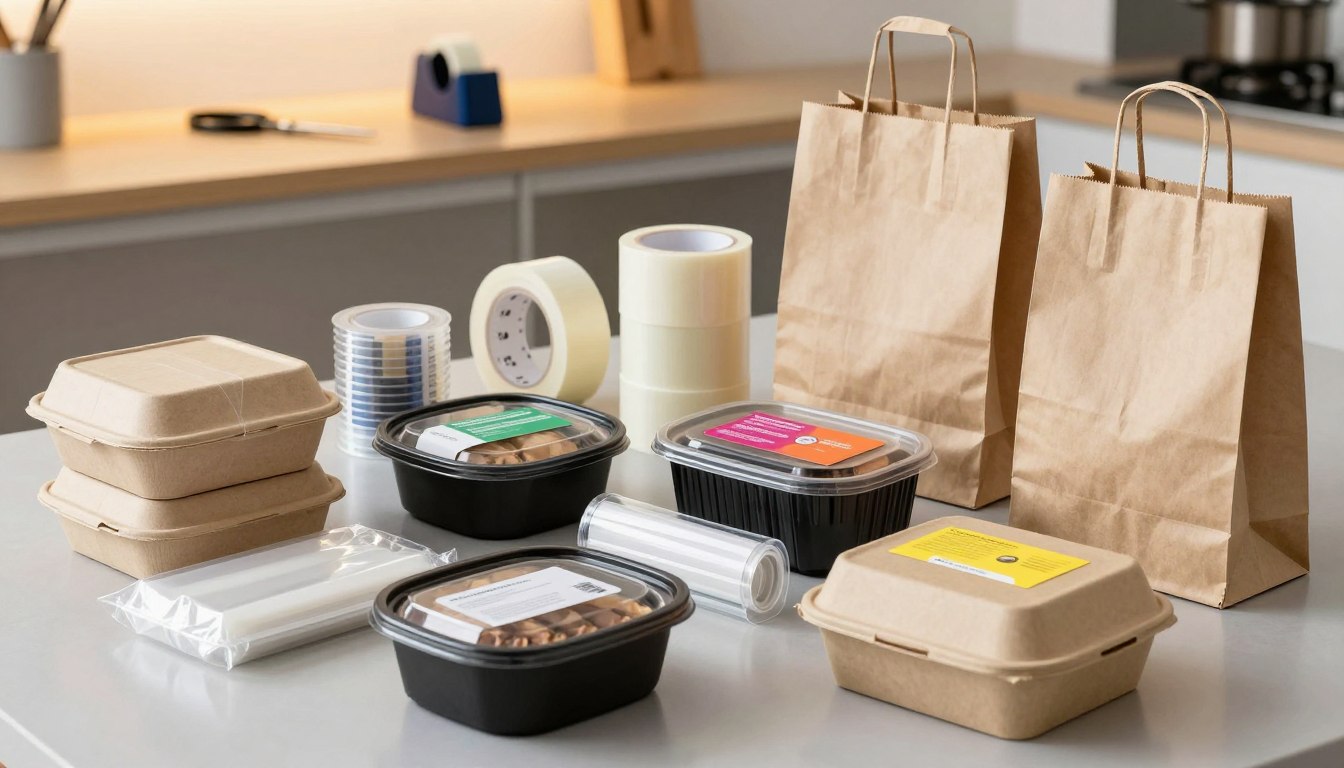
A neatly arranged assortment of food packaging materials displayed on a sleek, modern surface. In the foreground, a variety of eco-friendly containers, including biodegradable boxes, clear plastic wraps, and kraft paper bags, showcasing different textures and colors. The middle ground features labeled rolls of adhesive tape, reusable sealing clips, and vibrant labels, highlighting versatility in packaging options. In the background, a softly lit workspace showing tools like scissors and a tape dispenser, with warm, inviting lighting to create a professional yet approachable atmosphere. The scene is shot from a high angle to capture the full spread of materials, emphasizing organization and reliability in food packaging supplies.
Volume and Frequency Requirements
It's important to know how much packaging we need and how often. We should look at past sales, predict future needs, and think about seasonal changes.
- Look at how much packaging you use each month or year.
- Think about if your demand will change because of growth or new products.
- Check if the supplier can handle big or small orders and if they can deliver when you need them to.
Special Requirements and Customization Options
Some businesses need special packaging, like custom sizes or designs. It's important to find a supplier who can meet these needs. Customization options can include:
- Custom printing or labeling.
- Special packaging formats or designs.
- Materials that meet certain standards or regulations.
By knowing what we need, we can find the best wholesale supplier. This makes sure our packaging is just right for our business.
Key Criteria for Evaluating Wholesale Suppliers
When looking at wholesale suppliers, we must take a detailed approach. We need to check several important factors. These factors can greatly affect our business's success.
Product Range and Availability
It's key to see if the supplier has what we need. They should offer the right food packaging supplies in the right amounts. A good supplier also has a reliable delivery schedule.
Key considerations include:
- The variety of products offered
- Availability of products in stock
- Lead times for production and delivery
- Ability to meet large or specialized orders
Industry Experience and Reputation
A supplier's experience and reputation are very important. Suppliers with a strong track record in food packaging are more reliable. They better understand our needs.
To assess a supplier's reputation, we can:
- Check online reviews and testimonials
- Ask for references from existing clients
- Research their history and experience in the industry
Location and Distribution Capabilities
The supplier's location and distribution abilities are crucial. They affect shipping costs and delivery times. We must decide if a domestic or international supplier is best for us.
Domestic vs International Suppliers
Domestic suppliers are great for quick delivery and easy communication. They also follow local rules. But, international suppliers might have better prices or unique products.
Shipping and Logistics Infrastructure
A good shipping and logistics setup is essential. It ensures our goods arrive on time and at a good price. We should check if the supplier can handle logistics well.
By carefully looking at these criteria, we can find a reliable supplier. This supplier will help our business grow and succeed in the long run.
Quality Standards and Certifications to Look For
The quality of food packaging supplies is very important. It's key to check a supplier's quality standards and certifications. This ensures your packaging is safe and meets customer expectations.
FDA Compliance and Food Safety Standards
When choosing a supplier, FDA compliance is a must. The FDA has strict rules to keep food packaging safe. Suppliers who follow these rules show they care about safety.
FDA compliance means packaging meets certain criteria. It's made from approved materials and follows good manufacturing practices (GMPs). Suppliers should have proof of FDA compliance, like certification letters.
Sustainability Certifications
Many businesses now focus on sustainable packaging. Sustainability certifications show a supplier's products are eco-friendly.
FSC Certification for Paper Products
The Forest Stewardship Council (FSC) certification is key for paper products. It means the paper comes from responsibly managed forests. This is great for businesses wanting to be green.
BPI Certification for Compostable Materials
The Biodegradable Products Institute (BPI) certification is vital for compostable packaging. It ensures products can break down easily, reducing waste.
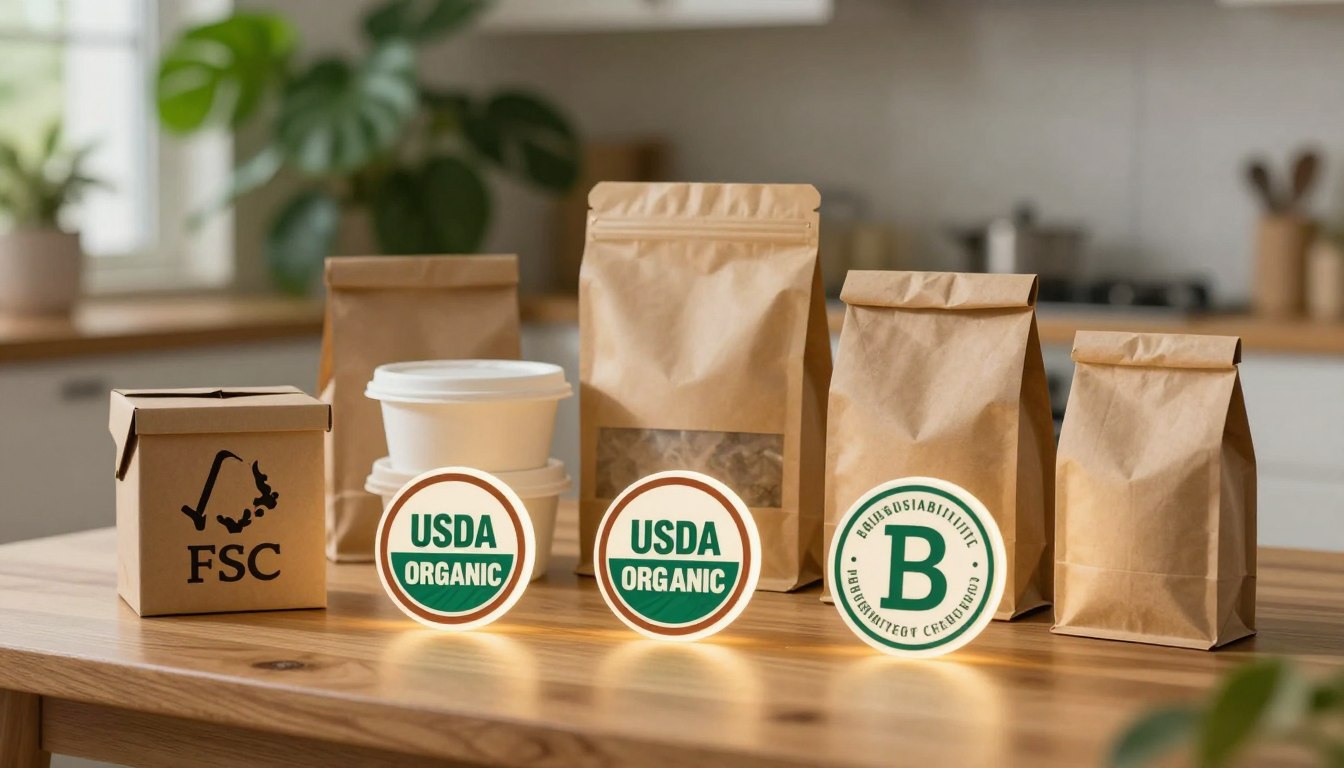
An aesthetically arranged display of sustainability certifications relevant to food packaging. In the foreground, a wooden table showcasing certification seals like FSC, USDA Organic, and B Corp, each glowing softly under warm ambient lighting. In the middle ground, eco-friendly packaging materials, such as biodegradable containers and recycled paper, are neatly arranged to symbolize commitment to sustainability. The background features a lush green plant, enhancing the natural theme, with a blurred kitchen setting that conveys a homey feel. The lighting is warm and inviting, suggesting a positive atmosphere of responsible sourcing and quality standards, captured in a shallow depth of field, focusing closely on the certification seals and packaging.
Quality Assurance Processes
A good quality assurance process is crucial. It includes regular testing and inspections. Suppliers should show their quality control steps and provide proof.
By looking at quality standards and certifications, businesses can be sure their packaging is safe and meets customer needs.
Pricing and Minimum Order Requirements
The cost of food packaging supplies is key to your business's success. It's important to know about wholesale pricing structures. Look at the cost per unit and the overall pricing model. Also, consider any minimum order requirements.
There are different pricing models to choose from. Tiered pricing lowers the cost per unit with larger orders. Flat-rate pricing keeps the cost the same, no matter the order size.
Understanding Wholesale Pricing Structures
Wholesale pricing for food packaging varies by supplier, product, and order size. Tiered pricing offers lower prices for bigger orders. This is good for businesses with lots of demand but not for small ones.
Flat-rate pricing is more predictable. It's important to know your supplier's pricing structure. Make sure it fits your business needs.
Evaluating Minimum Order Quantities
Minimum order quantities (MOQs) are crucial when picking a supplier. MOQs differ by supplier and product. Choose a supplier whose MOQs match your business needs.
Think about your demand, storage, and cash flow when looking at MOQs. Ordering too much can lead to waste and storage costs. Ordering too little means more frequent orders and higher costs.
Hidden Costs to Watch Out For
There are hidden costs to watch out for. These include shipping and handling fees, custom design charges, and other costs.
Shipping and Handling Fees
Shipping and handling fees can add up. Know how your supplier calculates these fees. See if they offer discounts for bulk orders or loyal customers.
Custom Design and Setup Charges
Custom packaging designs may come with extra fees. Some suppliers charge for design services or setup. Ask about these costs upfront to avoid surprises.
By looking at wholesale pricing, MOQs, and hidden costs, you can make a better choice. This helps manage your packaging costs and keeps your business competitive.
Supplier Reliability and Communication
Supplier reliability and communication are crucial for your business's food packaging supply chain. A reliable supplier ensures timely delivery. Good communication helps solve any problems that come up.
When looking at a wholesale supplier, check their reliability and communication. Look at their lead times, delivery schedules, customer service, and how they handle problems.
Lead Times and Delivery Schedules
Knowing a supplier's lead times and delivery schedules is key for a smooth supply chain. Reliable lead times help you plan your inventory and production. Ask about their typical lead times, rush orders, and delivery schedules.
Also, find out about their shipping policies and if they offer flexible delivery. A supplier that can adjust to your needs is very valuable, like during busy seasons or unexpected demand.
Customer Service and Support
Good customer service shows a supplier is reliable. You need a supplier that answers your questions quickly and clearly. They should also solve any problems you have.
To check a supplier's customer service, ask them questions or raise concerns. See how fast they respond and how helpful they are. A supplier that values customer service will support your business better.
Flexibility and Problem Resolution
No supply chain is perfect, so it's important to check a supplier's flexibility and problem-solving skills. A flexible supplier can handle changes in demand, supply chain problems, or unexpected issues.
When looking at a supplier's flexibility, see if they're willing to work with you to solve problems. Check if they can adapt to changes and find solutions that meet your needs.
By carefully checking these aspects of supplier reliability and communication, you can find a wholesale supplier that meets your food packaging needs well.
How to Conduct Supplier Due Diligence
Choosing the right wholesale supplier is key. You need to do a detailed check. This means looking at their skills, spotting risks, and making a smart choice.
Request Samples and Test Products
Start by asking for product samples. This lets you see if their products are good enough for you. It's also important to test these products. This way, you can see how well they're made.
Key considerations when testing products:
- Quality and durability
- Compliance with regulatory standards
- Performance under various conditions
Check References and Reviews
Looking at references and reviews is crucial. It helps you understand if the supplier is reliable and respected.
Industry Associations and Trade Organizations
Industry groups can tell you a lot about a supplier. They often have lists or databases that show if a supplier is trustworthy.
Online Reviews and Third-Party Ratings
Online feedback and ratings give you a quick look at a supplier's service and products. Check different places to get a full picture.
Example of a supplier review analysis table:
Review Platform | Rating | Comments |
Google Reviews | 4.5/5 | Generally positive, with some complaints about delivery times. |
Trustpilot | 4.2/5 | Positive comments about product quality, some issues with customer service. |
Industry Forum | 4.8/5 | Highly praised for reliability and product durability. |
Visit Facilities When Possible
Visiting the supplier's place can give you a lot of insight. It shows how they work, their quality checks, and if they can meet your needs.
Review Contracts and Terms Carefully
It's important to look over the supplier's contracts and terms. Know their prices, payment plans, delivery times, and any penalties for not meeting these.
Key contract elements to review:
- Pricing and payment terms
- Delivery schedules and logistics
- Quality standards and warranties
- Termination clauses
By doing these steps and doing a deep check, you can lower the risks of working with a supplier. This helps you have a good, lasting business partnership.
Conclusion
Finding a reliable wholesale supplier for food packaging is key to your business's success. Knowing what you need and evaluating suppliers carefully is important. This way, you can find a good partner.
We've talked about what to look for in a supplier. This includes the products they offer, their quality standards, prices, and how reliable they are. Doing your homework is crucial for a smart choice.
By using these tips, you can pick a supplier that fits your business needs. This helps keep your supply chain running smoothly. It's all about making your business better.
Working with the right suppliers means your business can meet market demands. You'll keep quality high and customers happy. It's a win-win for everyone.
FAQ
How do we determine which packaging material is best for our specific food products?
Start by checking your shelf-life needs and storage conditions. For hot meals, use polypropylene containers for heat and leak protection. For eco-friendly options, look at BPI-certified compostables or FSC-certified paper from WestRock. These choices can boost your brand's green image.
What are the primary benefits of choosing a domestic wholesale supplier over an international one?
Domestic suppliers offer faster service and lower shipping costs. They help avoid supply chain delays and ensure timely delivery. This keeps our stock levels steady without the wait times of international shipping.
How can we identify "hidden costs" before signing a wholesale contract?
Check the fine print for design, setup, and fuel surcharges. Ask for a "landed cost" estimate that includes shipping and logistics. This way, we avoid surprise costs and keep our profits healthy.
Why is FDA compliance absolutely non-negotiable for food packaging supplies?
Compliance ensures our packaging is safe for food. It keeps harmful chemicals out of our products. This protects our customers and our business from legal issues or recalls.
What is the most effective way to test a supplier’s reliability before placing a large bulk order?
Request samples to test packaging durability and function. Check third-party ratings and industry association memberships. This helps us understand their reputation and problem-solving skills.
How do Minimum Order Quantities (MOQs) impact our business operations?
MOQs affect our inventory costs and space needs. Higher MOQs can save money but require more storage. We aim for discounts while keeping enough cash flow for daily needs.
Contact
Leave your information and we will contact you.
电话
Whatapp